

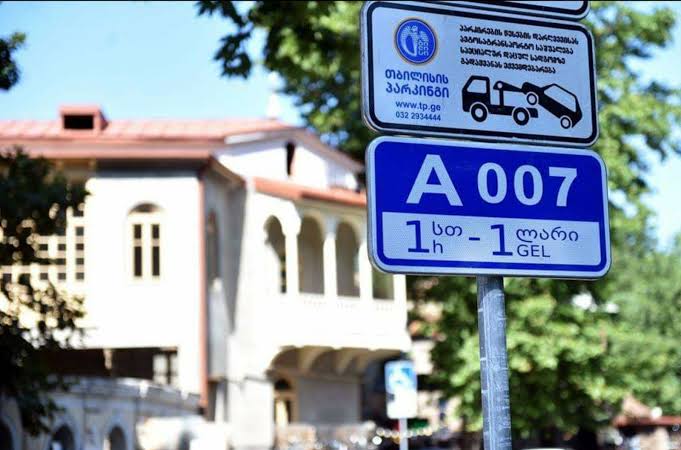
How to park in Georgia: useful information
Hiring a car in Georgia gives you access to the country’s most beautiful spots, but in the cities, tourists are soon faced with a practical problem: where to park. In Tbilisi and Batumi, parking is organised into zones, some of which are paid, and it’s worth understanding the rules in advance. Let’s take a look at how the car parks are organised, how to pay for a space and what penalties you face for breaking the rules. This information will be useful both for those travelling in their own car and for those hiring a car once they arrive.
How pay-and-display zones work
In city centres, a paid parking system is in place, and free spaces at the kerb are marked out and assigned to specific zones. Municipal parking operates on a permit basis: local residents purchase an annual sticker, whilst visitors pay for parking by the hour or by the day.
Towards the outskirts and in residential areas, there are often free parking spaces, but even there you’ll find sections with restriction signs. Always check the road markings and signs: they’ll tell you whether stopping is permitted and under what conditions.
Road markings are usually painted along the kerb, whilst information boards indicate the duration of the parking charge and the zone number. In Tbilisi’s historic districts, the streets are narrow, so there are few parking spaces and competition for them is fierce, particularly in the evenings and at weekends.
Where to find free places
It is actually possible to park your car for free if you venture a little way away from the tourist centre. In residential areas, and near large supermarkets and shopping centres, parking is often free for visitors for a couple of hours.
A good option is the underground and multi-storey car parks at shopping centres: they’re safe, offer shade and have a fixed rate with no risk of your car being towed away. In seaside towns, free parking spaces are snapped up quickly in summer, so it’s best to arrive at the beach early or use secure car parks.
How to pay for parking
The payment system is flexible and designed to cater for visitors as well. Payment for car parking can be made in a number of convenient ways, so there are usually no problems in this regard.
- Via the city’s mobile parking app with a map.
- By sending an SMS to the short number shown on the sign.
- At street terminals and kiosks near the area.
- By purchasing a day pass or a weekly pass for tourists.
If you’re renting for several days, it’s better value to take out a weekly pass than to pay by the hour. Check this option with the hire company: sometimes the permit is already included in the price of the car.
Enforcement and fines
Traffic discipline is enforced by cameras and traffic wardens, and parking enforcement is particularly strict during the tourist season. You will be fined for an unpaid or incorrectly parked car, and in some cases, your vehicle may be towed away.
|
Breach |
Consequence |
|
Unpaid parking |
On-the-spot fine or fine issued via CCTV |
|
Parking under the sign |
A fine and possible towing |
|
Disabled parking space |
Increased fine |
|
Roadblock |
Vehicle evacuation |
Fines are usually issued in the name of the hire car, so ultimately it is the driver who ends up paying them anyway. It is cheaper and less stressful to pay the fee straight away and avoid the risk of your car being towed away in an unfamiliar city.
If your car has been towed away, you can find out what has happened to it via the helpline or the app: these will show you the address of the impound yard and the amount due. The process of getting your car back takes time and money, and it’s particularly frustrating to have to spend a whole day on it in the middle of your holiday.
Truck park
Separate rules apply to heavy goods vehicles and commercial vehicles. In central areas, lorries are often prohibited from parking during the day, whilst special areas are designated at the city entrances for parking and unloading.
Long-distance lorry drivers find it easier to make use of secure parking areas along motorways and in logistics zones. These offer space to manoeuvre, rest areas for drivers and security for their cargo – things that are impossible to provide in the cramped city centre.
Short time slots are usually allocated in the early morning for deliveries to shops and cafés in the city centre. At other times, the movement and parking of heavy goods vehicles in the historic quarter are restricted, and fines for breaching these rules are more severe than those for ordinary unauthorised parking.
Tips for tourists
To avoid ruining your trip with fines and stress, keep a few simple rules in mind. They’re just as useful in the capital as they are in coastal towns.
- Please park your car only in designated spaces and in accordance with the signs.
- Please do not block courtyard exits or bus stops.
- In the mountains, use the handbrake and select a gear – the gradients are steep here.
- At markets and railway stations, choose secure areas.
- Please keep your payment receipt until the end of your parking session.
Conclusion
Parking in Georgia is straightforward if you understand how the zones work and pay attention to the signs: the system is straightforward, and prices are significantly lower than in Europe. All you need to do is pay for a space, avoid prohibited areas and check the rules for your type of car in advance. If you’re planning a trip with a hire car and want to sort out your route, parking and the finer points of the roads in advance, get in touch with us – we’ll help you plan everything down to the last detail.