

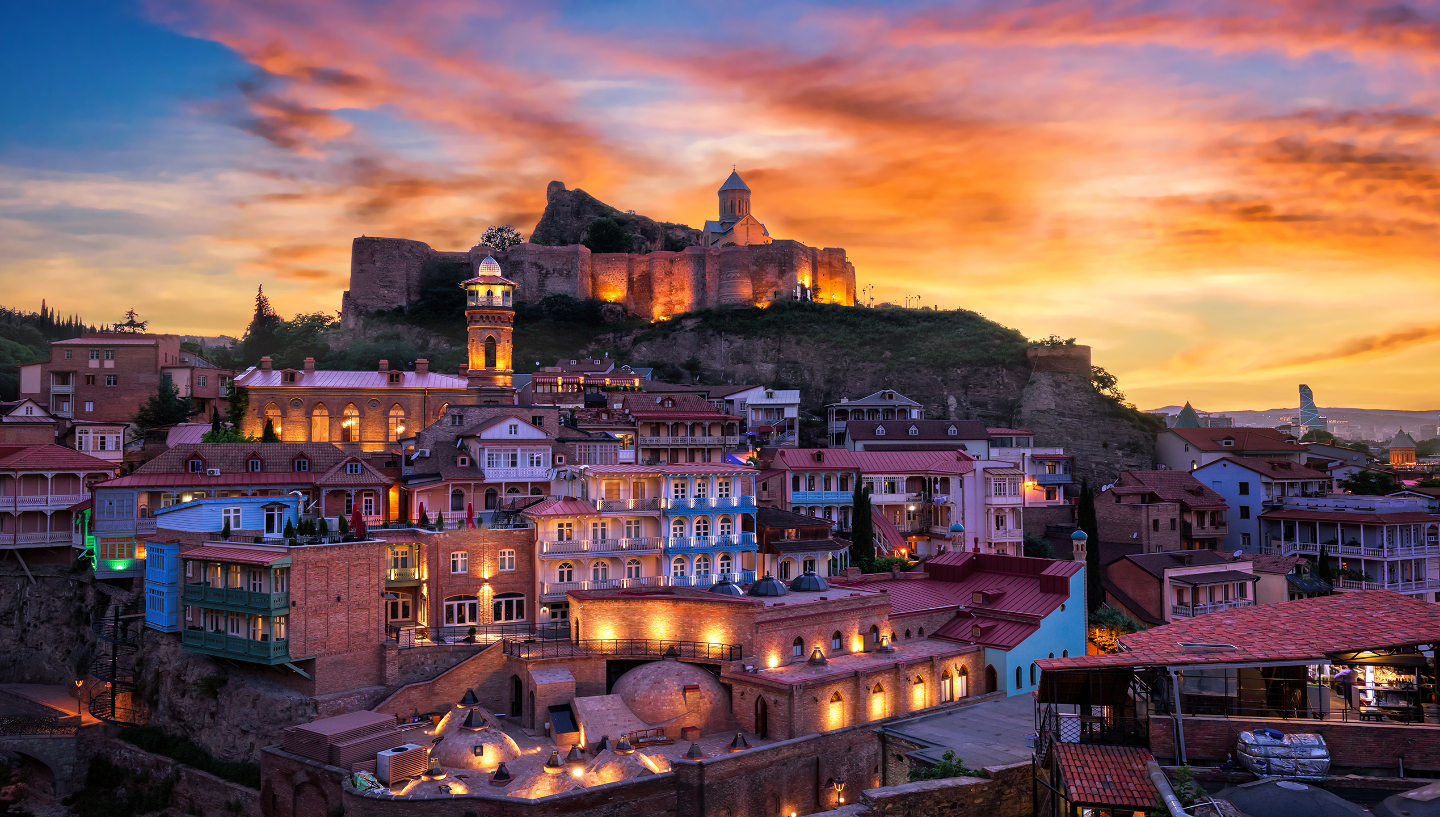
What to See in Tbilisi: 25 Places to Get to Know the City
Tbilisi surprises with its contrasts: medieval fortresses stand beside glass bridges, and the quiet courtyards of Sololaki hide just steps from the busy Rustaveli Avenue. If you're wondering for the first time what to see in Tbilisi, this route of 25 spots will help you cover both postcard views and lively neighborhoods without the touristy gloss. The best way to explore the Georgian capital is on foot, walking down from viewpoints to the old streets and ducking into random courtyards along the way.
Old Town: the heart of the capital
The historic core is compact enough to cover in one full day. This is where to start getting to know the city if you're deciding where to go in Tbilisi first. Here, on every corner, history is intertwined with the smell of fresh bread and wine.
- Narikala Fortress - an ancient citadel on a hill with the city's best panorama.
- Abanotubani sulfur baths - brick domes where Pushkin and Dumas once bathed.
- Legvtakhevi Waterfall - an unexpected cascade in a green gorge right behind the baths.
- Shardeni Street - a pedestrian zone with cafes, galleries, and evening live music.
- Metekhi Church - a church on a cliff and the equestrian statue of King Vakhtang Gorgasali.
- Sioni Cathedral - the city's main historic church, home to St. Nino's grapevine cross.
- Anchiskhati Basilica - Tbilisi's oldest church, built in the 6th century.
- Sololaki district - carved wooden balconies and Art Nouveau entryways with stained glass.
Viewpoints and parks
Head up to the hills surrounding the center for panoramas and greenery. These spots are ideal for anyone looking for where to walk in Tbilisi with a view over the old town's tiled roofs. It's best to plan the climb for morning or sunset, when the light is softer and the heat has eased off.
- Mother of Georgia statue - the city's symbol, a woman holding a bowl of wine and a sword.
- Mtatsminda Park - a Ferris wheel and rides at the city's highest point.
- Mtatsminda funicular - a vintage ride up with panoramic views the whole way.
- Turtle Lake - a quiet lake with cafes and shaded forest trails.
- Botanical Garden - a huge park in the gorge right behind Narikala Fortress.
Modern Tbilisi and the riverfront
New landmarks of the capital have grown right alongside the old ones, and the contrast makes for especially great photos. If you're wondering what else to see in Tbilisi beyond the ancient sites, take a look at the futuristic structures along the Kura River. In the evening they light up and completely transform the look of the riverfront.
- Bridge of Peace - a glass and steel arch over the river with wave-like night lighting.
- Rike Park - a modern recreational area with fountains, lawns, and pavilions.
- Cable car - cabins from Rike to Narikala in just a couple of minutes with postcard views.
- Gabriadze Clock Tower - a crooked, fairy-tale tower with a puppet theater and an angel.
Avenues, museums, and markets
The city's cultural axis runs along Rustaveli Avenue and leads toward its lively bazaars. This is a good place to plan where to go in Tbilisi on a rainy day, for souvenirs, or for local cuisine. Museums and markets give you a far better sense of the country than any postcard.
- Rustaveli Avenue - the main artery lined with theaters, museums, and historic mansions.
- Freedom Square - the central square with a golden statue of St. George on a column.
- Georgian National Museum - archaeology, ancient gold, and a hall on the Soviet occupation.
- Sameba Cathedral - a grand cathedral visible from almost anywhere in the city.
- Dry Bridge - a flea market of antiques, jewelry, coins, and curiosities.
- Deserters' Bazaar - a colorful market with spices, cheese, herbs, and churchkhela.
- Ethnographic Museum - wooden houses from across Georgia, displayed outdoors.
- Agmashenebeli Avenue - a restored pedestrian street with bars and archways.
How to plan your route
All 25 spots can realistically be covered in two to three unhurried days if you group them by neighborhood. It makes sense to dedicate the first day to the old town and the viewpoints, the second to the modern riverfront and museums, and the third to the markets and spontaneous strolls.
Day 1: Narikala, Abanotubani, Shardeni, the cable car, and sunset at Mtatsminda.
Day 2: Bridge of Peace, Rike Park, Sameba, the National Museum, and Rustaveli Avenue.
Day 3: Dry Bridge, Deserters' Bazaar, Agmashenebeli Avenue, and the favorite courtyards of Sololaki.
It's easy to get between neighborhoods by metro or Bolt taxi: prices are low, and traffic in the center can be noticeable. Plan your walking stretches downhill from the hills rather than climbing them in the heat.
The best time to visit is spring and early autumn, from April to June and September to October. Summer in the city is hot and humid, though accommodation is cheaper, while winter is mild but many viewpoints are often shrouded in fog. During the shoulder seasons, it's comfortable to walk all day, and the blossoming or golden hillsides add a special atmosphere to the views.
Conclusion
The Georgian capital is equally rewarding for a first visit and for those coming back again. This list points to what's worth seeing in Tbilisi without rushing: from fortresses and temples to modern bridges and bustling markets. Build your route around the old town and one viewpoint, then add the rest according to your mood and the weather.