

Internet and mobile networks in Georgia: what you need to know
When planning a trip, travellers almost always think about how to stay connected without paying over the odds for roaming. Fortunately, mobile coverage in Georgia is cheap, fast and extends even to mountainous areas. In this article, we’ll look at whether it’s worth getting a local SIM card, which provider to choose, and how to make sense of the different tariffs and numbers.
Do tourists need a local SIM card?
Roaming with your home network whilst travelling can be expensive, so it’s better value to buy a local SIM card as soon as you arrive. A Georgian SIM card registered to your passport gives you internet access and calls at local rates, and a week’s data allowance is enough for maps, messaging apps and social media.
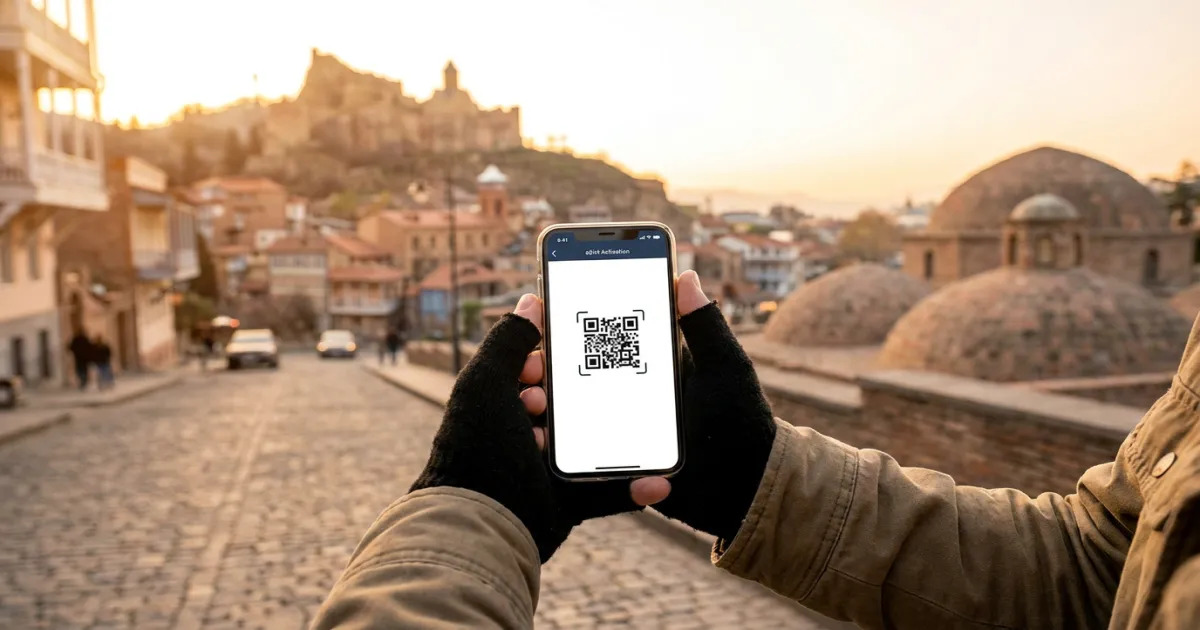
An alternative is an eSIM, which can be activated online in advance. It’s convenient for those who don’t want to go to a shop, but a physical SIM card is usually cheaper for the same amount of data.
The country’s main operators
The market is dominated by three major players, and these are the ones you should consider first. Georgia’s leading mobile operators offer similar tariffs; the main differences tend to lie in the quality of coverage and speed in specific regions.
|
Operator |
Strength |
Who is it suitable for? |
|
Magti |
Best coverage and speed |
Trips to the regions and the mountains |
|
Silknet |
Great-value data packages |
For budget-conscious travellers |
|
Cellfie |
Low telecoms prices |
For short trips to towns |
All the Georgian mobile network operators listed here operate on 4G networks, whilst 5G is gradually becoming available in Tbilisi and Batumi. In rural areas and on winding roads, the first brand in the table offers the most stable signal.
Which mobile network should I choose?
There is no one-size-fits-all answer to the question of which mobile network is best in Georgia: it all depends on your route. If you’re heading to Bakuriani or travelling to Svaneti, choose a network with the widest coverage, whilst a cheaper option will suffice if you’re staying in the major cities.
Major mobile network operators in Georgia offer special tourist packages with large data allowances valid for 7-30 days. It is better value to purchase these directly at the airport or from an official shop, rather than from small kiosks that charge a mark-up.
Traffic speed and quality
There are hardly any issues with data connectivity: mobile internet in Georgia is fast and accessible even in small villages. The average speed in towns is more than adequate for video calls and streaming, and tourist data packages offer tens of gigabytes for a nominal fee.
Mobile coverage in Georgia remains stable along the main roads, but the signal may drop out in deep gorges and high-altitude areas. To navigate in such places, download offline maps in advance.
If you plan to make extensive use of sat-nav, maps and video calls, opt for a plan with plenty of gigabytes: the price difference between the medium and large data allowances is minimal. With most plans, any remaining data is forfeited at the end of the billing period, so choose a plan based on the actual length of your trip, rather than the maximum possible duration.
Codes and number structure
It’s not difficult to make sense of the numbers: the country code is +995, and mobile numbers consist of nine digits and begin with the number five. The exact codes for Georgia’s mobile operators are listed on the SIM card packaging, making it easy to identify which network a number belongs to.
Searches for ‘Georgian mobile network codes’ are typically carried out by tourists who want to find out in advance which prefix corresponds to which network. In practice, this is rarely necessary: when you buy a SIM card, the sales assistant will tell you your number and its format.
Fixed-line access for long-term rental
If you’re renting a flat for the long term, you’ll find Georgia’s internet service providers—which offer both wired and fibre-optic connections—useful. These are usually the same telecoms brands as in the mobile sector, so the contract can be sorted out quickly.
Home internet speeds in cities are fast, and prices are significantly lower than in Europe. In apartments and guest houses, Wi-Fi is usually included in the price of your stay.
A step-by-step guide to buying a SIM card
To ensure the connection works straight away, follow these simple steps.
- Please bring your passport with you; it is essential for the application process.
- Choose a mobile network operator based on your route and the amount of data you need.
- Ask for a holiday package that includes internet access, rather than the basic tariff.
- Check that it’s activated and check the speed right there in the showroom, before you set off.
- Please keep your receipt and the support number in case you have any questions.
Conclusion
Staying connected in Georgia is easy, cheap and convenient: a local SIM card sorts out your internet and calls in a matter of minutes, and the signal is reliable even in the mountains. Decide on a mobile provider in advance, opt for a tourist package and don’t forget your passport. If you want to plan a hassle-free trip and choose the right mobile plan and itinerary to suit your needs, get in touch with us - we’ll recommend the best solution for your budget and destination.